On January 25, data released by the U.S. Department of Labor showed that initial jobless claims fell to 198,000 in the week ending January 19. This figure was not only far below the market consensus of 215,000 but also hit the lowest level since September 2024. Like a stone dropped into a calm lake, this number sent ripples across U.S. financial markets.
The robust performance of the labor market is no isolated incident; it is corroborated by other recently released economic data. U.S. gross domestic product (GDP) grew at an annualized rate of 3.3% in the fourth quarter, surpassing all economists’ expectations. Consumer spending remained stable, business investment continued to rise, and the housing market showed signs of recovery after adapting to the high-interest-rate environment.
Together, these data paint a picture of a steadily expanding U.S. economy, even as the Federal Reserve has pushed interest rates to their highest level in more than two decades. This economic resilience has put policymakers in a complicated position: while inflation has retreated from its peak, the “last mile” toward the 2% target appears to be longer than expected.
Following the release of the data, subtle shifts have emerged in the public remarks of Fed officials. Austan Goolsbee, President of the Federal Reserve Bank of Chicago, noted in a recent speech that the Fed may be entering a “period of holding policy at a restrictive level.” His comments echoed those of Raphael Bostic, President of the Federal Reserve Bank of Atlanta, who explicitly stated his preference for keeping interest rates unchanged “until before summer.”
This shift in policy stance is reflected in the financial market’s repricing of rate-cut expectations. Just a month ago, traders widely anticipated that the Fed would kick off its rate-cut cycle in March, with as many as six cuts throughout the year. Now, market expectations have been significantly revised—the timing of the first rate cut has been pushed back to May or even June, and the projected number of cuts for the year has been reduced to three or four.
The persistent tightness of the labor market carries particular significance for the inflation trajectory. When businesses struggle to hire enough workers, they tend to raise wages to attract and retain talent. Wage growth itself is not an inflation problem, but when productivity growth fails to fully offset wage increases, companies usually pass on the costs by raising product prices, thereby creating upward pressure for a wage-price spiral.
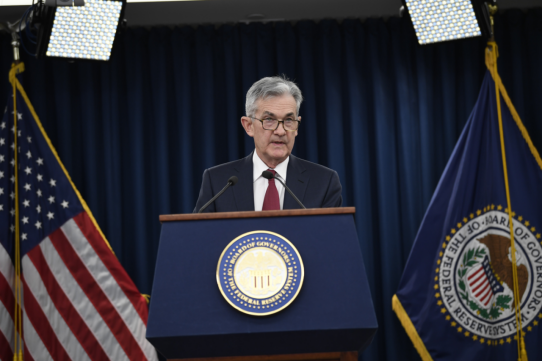
Latest data showed that average hourly earnings in the U.S. rose by 4.1% year-on-year in December. Although the growth rate has slowed from the peak seen in previous months, it remains significantly higher than pre-pandemic levels. Services inflation—a key indicator repeatedly emphasized by Federal Reserve Chair Jerome Powell—remains stubborn, partly due to persistently high labor costs.
In the face of stronger-than-expected economic data, financial markets have undergone notable adjustments. On the day the data was released, the U.S. two-year Treasury yield—a rate metric most sensitive to monetary policy expectations—climbed 8 basis points to hit 4.37%. The U.S. Dollar Index strengthened in tandem, rising 0.6% against a basket of currencies. Stock markets reacted with divergence: interest-rate-sensitive tech stocks came under pressure, while financial and energy sectors performed relatively solidly.
This market reaction reflects investors’ reassessment of the implications of a “higher-for-longer” interest rate scenario. A prolonged period of high interest rates means that corporate financing costs will remain elevated, consumer credit pressures (especially for mortgages and auto loans) will persist, and the interest burden on government debt will become even heavier.
Looking back at history, one of the biggest challenges the Federal Reserve has faced in fighting inflation is “loosening policy prematurely.” In the 1970s, then-Fed Chair Arthur Burns shifted to accommodative policies before inflation was fully under control, leading to entrenched inflation expectations and ultimately forcing a more severe economic contraction to regain price stability. Current Fed officials are keenly aware of this historical lesson, and Powell and his colleagues have emphasized on multiple occasions that they aim to avoid repeating past mistakes.
Looking ahead to the coming months, the Fed’s policy path will hinge on the evolution of a series of key data points. Beyond labor market indicators, policymakers will closely monitor inflation data for January and February, changes in consumer spending, and the global economic growth trajectory. Geopolitical risks, energy price fluctuations, and financial market conditions will also be taken into account.
The resilience displayed by the U.S. economy at present is both good news and a policy challenge. It means the economy may avoid a recession, but it also suggests that interest rates need to stay high for a longer period to ensure inflation returns to the target level sustainably. For the Federal Reserve, striking a balance between overly tightening policy (which could trigger an economic downturn) and easing too early (which could allow inflation to rebound) will be the core task of monetary policy in 2024.
In the period ahead, every release of economic data is likely to trigger market reassessments and adjustments. Meanwhile, every word from Fed officials will be closely parsed by market participants, who will seek to detect clues about a potential policy shift. In such an uncertain environment, the only certainty is that the Federal Reserve’s decisions will continue to have far-reaching implications for the global economy.
发表回复